




If you’ve ever pressed the accelerator pedal in your car, ute, or 4WD and felt the engine respond, you’ve relied on your vehicle’s throttle.
It’s one of those components that most drivers never think about, yet it plays a central role in how a vehicle accelerates, performs, and feels to drive.
Whether you’re towing a caravan, navigating city traffic, or tackling an off-road trail, the throttle is doing the behind-the-scenes work that translates your right foot into forward motion.
In this article, we’ll break down what a throttle actually is, how it has evolved over the decades, and why many Australian drivers are choosing to upgrade or customise their throttle response with aftermarket devices.
What Does “Throttle” Actually Mean?
In simple terms, the throttle is the mechanism that controls how much air (and, in some engines, fuel) enters the engine. The more air that flows in, the more the engine can combust, and the more power it produces. When you press the accelerator pedal, you’re essentially asking the engine for more power by opening the throttle further.
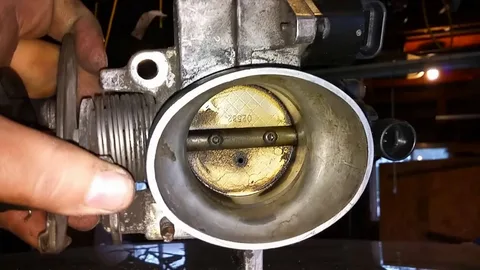
Historically, the throttle was a physical butterfly valve inside the throttle body, mechanically linked to the accelerator pedal via a steel cable. Push the pedal down, the cable pulls the valve open, and air rushes into the engine. It was a direct, mechanical relationship.
From Cables to Electronics: The Rise of Drive-by-Wire
Most modern vehicles no longer use a mechanical cable at all. Instead, they rely on what’s known as “drive-by-wire” or electronic throttle control (ETC). Here’s how it works:
- The accelerator pedal has a sensor that measures how far and how quickly it’s pressed.
- That signal is sent electronically to the vehicle’s Engine Control Unit (ECU).
- The ECU processes the signal and decides how far to open the throttle body, which is now controlled by a small electric motor rather than a cable.
- The ECU also factors in other variables, such as traction control, fuel economy targets, and emissions requirements, before deciding on the final throttle position.
This system offers manufacturers far greater control over how a vehicle behaves. It allows for smoother idle control, better integration with safety systems, and more consistent emissions performance. However, it also introduces something many drivers notice and dislike: a slight delay, or lag, between pressing the pedal and the vehicle actually responding.
Why Throttle Lag Happens
Throttle lag is largely a deliberate design choice rather than a fault. Manufacturers often program a “soft” initial pedal response for a few practical reasons:
- Fuel efficiency – softening the early throttle response can reduce fuel consumption during normal driving.
- Emissions compliance – manufacturers must meet strict emissions standards, and a gentler throttle curve helps achieve this.
- Smoothness for the average driver – a very sharp, aggressive throttle response might feel jerky or unrefined for everyday commuting.
- Safety margins – some vehicles are tuned conservatively so that sudden or accidental pedal movements don’t cause an unexpected surge of power.
While this makes sense for the broadest range of drivers, it can be frustrating in situations where you need immediate power, such as overtaking on the highway, merging into fast-moving traffic, or trying to get a heavily loaded 4WD moving on a steep incline.
How Throttle Controllers Change the Equation
This is where aftermarket throttle controllers come in. A throttle controller is a small electronic device that sits between the accelerator pedal sensor and the ECU. Rather than replacing any factory components, it intercepts and adjusts the voltage signal being sent from the pedal, effectively recalibrating how the vehicle interprets your pedal input.
In practical terms, a throttle controller can:
- Sharpen throttle response so the vehicle reacts more immediately to pedal input.
- Offer multiple driving modes (such as Eco, Normal, and Sport or Race) to suit different driving conditions.
- Reduce the perceived “dead zone” at the top of the pedal travel, where very little happens for the first portion of pedal movement.
- Allow the driver to fine-tune sensitivity to personal preference, rather than accepting the factory-set default.
Because the device works purely on the signal level, it doesn’t alter engine tuning, fuel maps, or horsepower output. Instead, it changes how quickly and aggressively that existing power is delivered, which is why many owners describe the difference as feeling like the “lag” has been removed.
For Australian drivers looking to upgrade this experience, products like the TR+ Throttle Controllers are a popular option, offering adjustable response settings tailored to local vehicles and driving conditions, including towing and touring setups.
Who Benefits Most From a Throttle Controller?
Not every driver needs a throttle controller, but several groups tend to notice a significant improvement:
- Tow vehicle owners – improved responsiveness helps when merging or overtaking with a loaded trailer or caravan.
- 4WD and off-road enthusiasts – finer throttle control assists with low-speed manoeuvring over rocks, sand, or mud.
- Performance-focused drivers – sharper response can make a vehicle feel noticeably more engaging on the road.
- Daily commuters – some simply prefer a snappier, more direct feel when driving in traffic.
A Closer Look: Video Explainer
For those who prefer a visual explanation, this YouTube video offers a practical, real-world look at how throttle controllers work and whether they’re worth fitting to your vehicle: The TRUTH about throttle controllers… Do you really need one?
Final Thoughts
The throttle might be a small, often-overlooked part of your vehicle, but it has a big influence on how your car feels to drive every single day.
As vehicles have shifted from mechanical cables to fully electronic, computer-managed systems, manufacturers have prioritised efficiency and emissions over outright responsiveness.
That’s a sensible approach for the average driver, but it leaves some room for improvement for those who tow, drive off-road, or simply want a more engaging connection between foot and engine.
Understanding how your throttle works, and the options available to adjust its behaviour, puts you in a better position to decide whether an upgrade is worthwhile for your driving needs.
Whether you’re chasing sharper overtaking power, smoother low-speed control off-road, or just a more direct feel behind the wheel, a well-chosen throttle controller can make a noticeable difference without touching your engine’s underlying tune.
